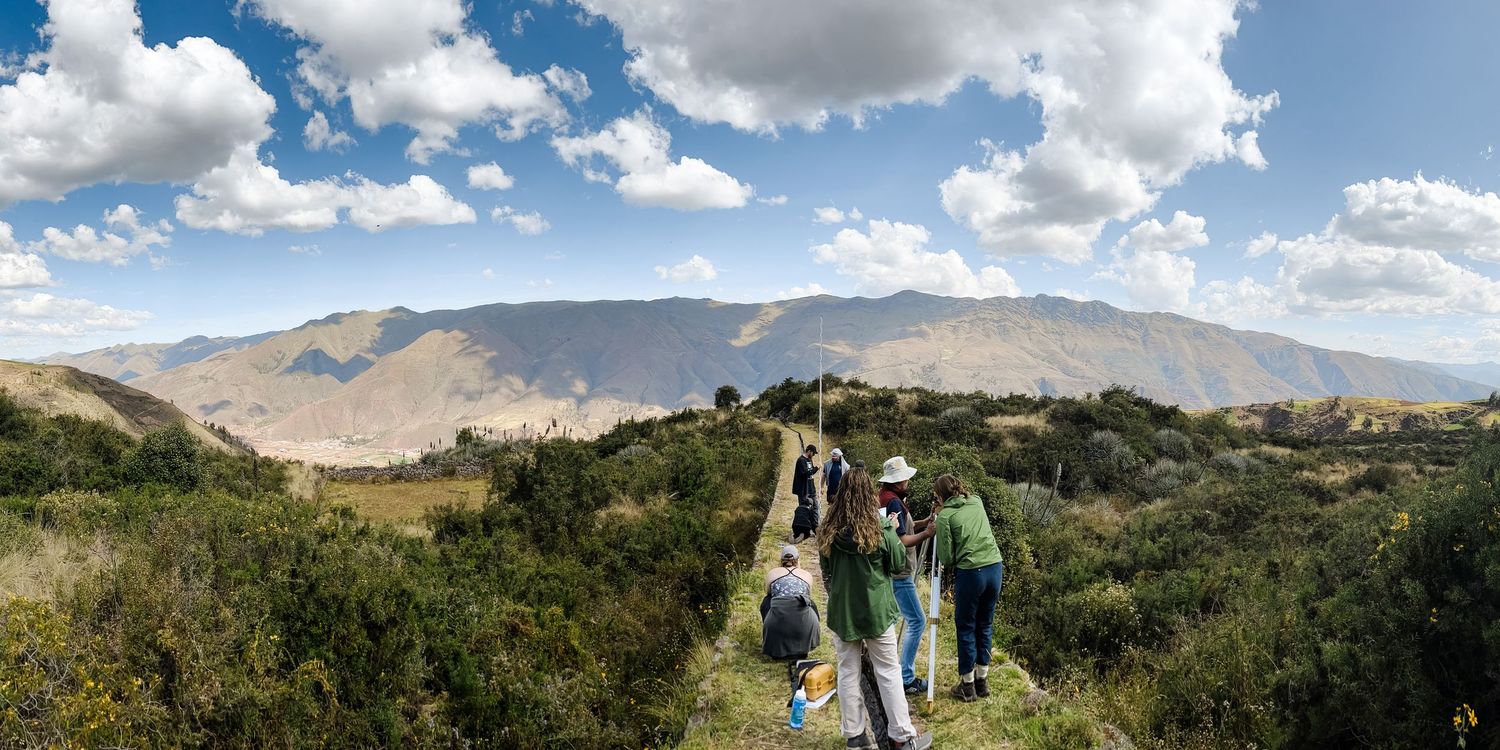
1. Introduction: Overview of Local Geology and Geography
The goal of this guidebook is to highlight the best hiking and outdoor adventure spots in the Eastern Townships and Northern New England. Serving as a resource for Bishop’s University students, visitors and alumni, it offers student recommendations on trails and scenic spots. Rooted in the theme of sustainability, this book explores the following topics: local geology and geography, ethics and best practices for sustainable outdoor recreation, the evolution of conservation efforts in Canada, and how the landscape shaped Indigenous Knowledge Systems. These topics will be incorporated into short essays throughout the guidebook.
Before diving into specific trails and scenic locations, I will first discuss how geological and glacial processes have shaped the bedrock of the Eastern Townships and Northern New England. These forces have created the landscapes and geographical features we see today.
It is important to acknowledge that we are located on land which has long served as a site of meeting and exchange amongst Indigenous peoples, including the Abenaki First Nations. Canada was founded on the principles of colonization, a system rooted in oppression and abuse of power over Indigenous communities. As individuals who spend time outdoors, it is crucial to recognize that Indigenous peoples are the original stewards of the land and areas on which we study, work, and explore daily. Their efforts in protecting and caring for this land should be respected and upheld in all interactions with the surrounding environment. It is essential to take time to reflect on the histories of the land we are on, understand the deep connection Indigenous peoples have to these spaces, and make continuous efforts to learn about the history of the area and support ongoing conservation efforts. Further exploration of local Indigenous histories will be in a dedicated chapter later in this book.
Formation of the Appalachians and Their Impact on the Landscape
The Eastern Townships and a portion of Northern New England are situated in the Appalachian Mountains. The Appalachians span from Newfoundland to the southeastern coast of the United States and are the result of millions of years of geologic activity (Tarbuck et al., 2005). To understand why these landscapes are the way they are today, we need to travel back in time. Around 600 million to 4 billion years ago, during the late Precambrian, the process of rifting, which is divergent plate motions, led to the formation of new plate boundaries and the separation of continents. As a result, North America (then part of Laurasia) separated from Africa (then part of Gondwanaland), forming the ancient Iapetus Ocean. This separation explains why North America is no longer connected to Africa today, but also why there are similar geological features found in the Appalachians and parts of Western Africa. As the land continued to separate and Iapetus grew, the eastern part of North America saw the deposition of land-derived sediments. During the Cambrian, the North American and African plates started to converge, and Iapetus began to shrink, with oceanic crust being destroyed by sinking back into the Earth’s mantle, in a process called subduction. This process led to the formation of a volcanic island arc east of North America. As convergence continued, a portion of the oceanic plate was abducted, which means it was pushed onto the continent, forming an ophiolite. The volcanic island arc was accreted to eastern North America as well. The continued subduction of the oceanic crust led to the closure of the Iapetus Ocean and brought the western portion of Gondwanaland into collision with North America, leading to the formation of the Appalachian Mountains by compressing and uplifting marine sediments from the ocean, and folding the sediment layers into tall peaks and valleys (Tarbuck et al., 2005). The continents later separated again during the Mesozoic era, forming the North Atlantic Ocean (Tarbuck et al., 2005). Due to continuous erosion over millions of years, the Appalachians have been worn down by wind, water, and ice, reducing their height down into the gentler hills and ridges we see today (Tarbuck et al., 2005). Nevertheless, they vastly shape human activity and ecosystems.
Glacial activity also shaped the landscape of this region. As glaciers retreated over the Eastern Townships and Northern New England, they shaped the topography resulting in the rolling hills we see today (Hoffman & Watson, 2025). The glacier's movements moved sediments across the landscape as well, leaving behind drumlins which is a hill or mound shaped by glaciers, moraines, material left behind by moving glaciers, and eskers - a narrow winding ridge (Hoffman & Watson, 2025).
The Iapetus Ocean once experienced tropical conditions which explains the presence of ancient coral reefs in the Eastern Townships. These reefs formed limestone deposits that now contain fossils of corals that were once there. As the Iapetus Ocean closed, sections of the oceanic floor were accreted onto North America as the two land masses collided leaving behind remnants of coral.
Volcanic sediments trace back to the accreted volcanic island arc that merged with North America during the formation of the Appalachians. Along with this arc, volcanic rock and ophiolites were also accreted. This ancient geological event led to the landscape we see today and is used for activities such as hiking. It impacts the trail difficulty and the scenic beauty.
Overview of Geography
The Eastern Townships are located in southeastern Québec. This region extends from Granby in the southwest to Drummondville in the northeast, lying between the St. Lawrence Lowlands and the borders of Vermont, New Hampshire and Maine. Within the Eastern Townships, there are 9 regions; Brome-Missisquoi, Granby, Memphrémagog, Sherbrooke, Coaticook, Val-Saint-Francois, Des Sources, Haut-Saint-Francois, and Mégantic. The major hills in the area include extensions of the Appalachians, extensions of the Green Mountains (Sutton), the Stoke Mountains, and the Mégantic Range. They are the features that significantly shape the region’s outdoor activities such as hiking and skiing (Eastern Townships, 2025). Visit the Tourism Eastern Townships webpage to learn more (Tourism Eastern Townships, 2025).
New England is situated in the northeast corner of the United States, directly south of the Quebec border and includes the following states: Connecticut, Maine, Massachusetts, New Hampshire, Rhode Island and Vermont. The scope of this book will focus solely on the three northern states, Vermont, New Hampshire and Maine, as they are closest to Bishop’s University. One of the most iconic mountain ranges in the US is the Presidential Range in New Hampshire. Of the 13 mountains in this range, 9 are over 1200 meters in elevation. (Appalachian Mountain Club, 2021). Visit the Discover New England webpage to learn more (Discover New England, n.d.).
Within the two locations (the Eastern Townships and Northern New England) there are various lakes and rivers, forests, mountain ranges with hiking and skiing trails, and more. Both experience all 4 seasons with harsh winters and mild summers. Significant geographical features include the Green Mountains, White Mountains, Lac Memphrémagog, Chaloupe River, and the influence of the St Lawrence River (Behiels, 2023). Mont Orford is one of the closest hills to Bishop’s University and is part of the Orford ophiolite complex rock formation (Patten et al., 2022). The Orford ophiolite is an intrusion, which means it consists of rocks that were originally formed beneath the earth's surface, and these rocks were later forced upwards by tectonic movement (Patten et al., 2022). These rocks include gabbros, peridotites, and volcanic rocks. The Orford ophiolite complex contains minerals such as nickel and copper that were formed through hydrothermal activity, where hot water circulates through rocks, changing them and concentrating minerals (Patten et al., 2022). The rocks present in Mont Orford show a linkage to the ancient oceanic environment as the minerals suggest that Mont Orford was formed in a subduction zone, where ocean plates were being pushed down into the mantle (Patten et al., 2022).
Mineral Deposits
The Eastern Townships have a rich mining history, once serving as one of Québec’s primary sources of copper and gold (Énergie et Ressources naturelles Québec, n.d.). Today, although large-scale mining has declined, several former sites have been repurposed for tourism. The Capelton Mines, one of Canada’s first copper mines, now offer visitors underground tours showcasing mining techniques (Capelton Mine, n.d.). Similarly, Chartierville’s Gold Mine Interpretation Centre provides insights into the region’s small-scale gold rush (Municipalité de Chartierville, 2024). In Val-des-Sources (formerly Asbestos), visitors can explore the history of one of the world’s largest asbestos mines, now part of a community transitioning to sustainable industries (Dubois & Baker, 2009; Northeast Biosolids & Residuals Association, 2018).
Climate and Weather
The Eastern Townships and Northern New England are known and loved for their cold winters and mild summers, great for skiing and hiking. As identified by the Koppen climate classification, the Eastern Townships are located in a humid continental mild summer zone, with year-round precipitation (Plant Maps, 2025a). The majority of Northern New England is in the same classification, except for a small portion of New Hampshire and Maine being classified as subarctic with cool summers and rainfall, and then within that, an even smaller tundra climate (Plant Maps, 2025b). The presence of these other two climate types is due to elevation, most likely heavily influenced by the presence of the White Mountains, which is a mountain range covering New Hampshire (Murray et al., 2021). These two other climate zones are located in the White Mountains, the same area as Mt Washington, the highest peak in eastern North America.
Mt Washington, located in the White Mountains, has a unique climate compared to the rest of northern New England and the eastern townships as it has the highest elevation, and this higher elevation results in colder temperatures and increased precipitation (Murray et al., 2021). It is known for its record-breaking wind, with the highest recorded speed in 1934 at 231 miles per hour (Branton, 2023; Murray et al., 2021). When large masses of air approach a large obstacle, such as Mt Washington, they cannot go through it, thus, the air is forced to go upwards, which is called orographic uplift (C. Donald Ahrens & Henson, 2023). This led to an abundance of precipitation on the upwind side of the mountain. When the air moves down the downwind side, it warms and dries out (C. Donald Ahrens & Henson, 2023).
Mont-Mégantic is the highest point in the eastern townships at 1,102 meters elevation. In the Eastern townships, average January temperatures are -10*C and average July temperatures are 20*C. The climate is influenced by the latitude, elevation, and proximity to the St. Lawrence (Behiels, 2023).
Enter a Heading
This is a paragraph. Click edit and enter your own text. You can make changes like making the text bold, underline or italic. This is a great place for you to tell your clients more about your story and to describe the type of photographer you are. You can come back at any time to make more changes.