The Story
In May of 2023 I was very fortunate to be able to spend 2 weeks in Peru studying Water Resource Management and Sustainable Practices, a program hosted by The Green Program. This opportunity was made possible to me thanks to the B.E.S.T Project Fund as this funding covered nearly 80% of the entire cost (program cost, travel, food, everything!).
"In 2010 a Bishop’s graduate (who wishes to remain anonymous), with a strong belief in our University and a desire to help our most promising students achieve their full potential, made a gift commitment to establish the Bishop's Exceptional Student Talent Project Fund. The B.E.S.T. Project Fund is the premiere experiential learning opportunity at Bishop’s. This unique fund is intended to assist students to determine their career paths and realize their ambitions. The funds are awarded to students whom the Selection Committee believes have the potential for significant achievement and impact once they graduate from Bishop’s." My process with the B.E.S.T Project Fund was great. I had a 7 page application I submitted, as well as a reference letter from a professor I asked to be my mentor. The application included goals of the project, a detailed budget, a biography, and more. Specific details of the application requirements can be found on the website, and I am always happy to answer any questions to the best of my ability. The selection committee was very helpful throughout the whole process and answered questions I had about the application. After submitting the application, successful applicants move on to a round of interviews.
In Peru, our days were split up into class and field work. Our in class lectures were at the Universidad San Ignacio de Loyola, and were taught by professor Oscar Ortega. There, we had classes on Peruvian diversity, past and present local water management practices, environmental concerns in Peru, climate change, and renewable energy and sustainable development in the Peruvian context. Throughout the two weeks we were also in groups working on our capstone projects that we presented at the end of the trip. My groups project was titled "River Restoration With Recycling". The goal of our capstone project was to improve the cleanliness of the Huatanay River by reducing plastic waste, ultimately aiming to improve the water quality and reduce the negative impact on the surrounding environment. This would be done by providing an incentive for the community to recycle more by starting our own private, social benefit recycling corporation, implementing recycling vending machines and having our own recycling system so that the responsibility is not on the government. It was a great experience to work on this group capstone project as we all had varying ideas and backgrounds which made for a unique collaboration. The development process of our presentation fostered problem solving skills as we had to navigate a
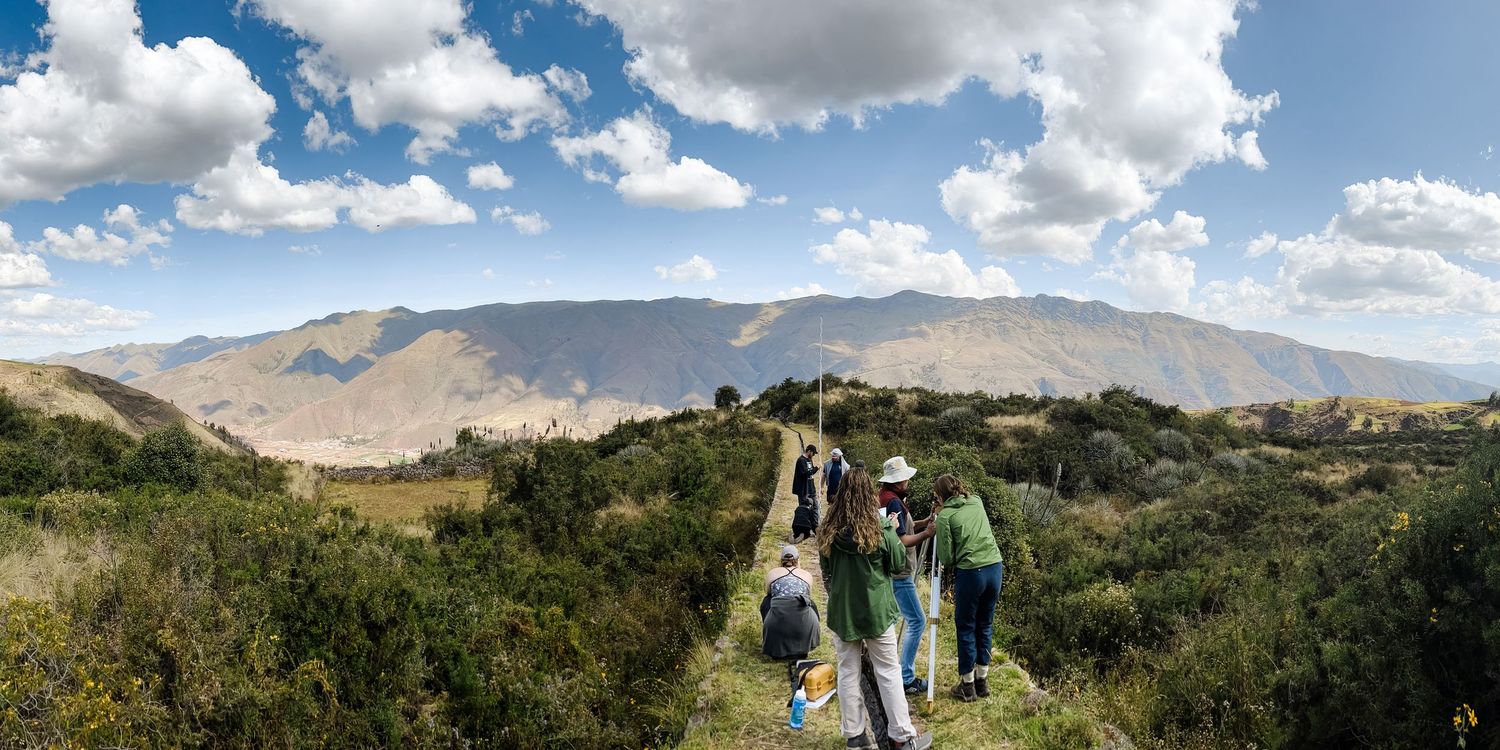
We also had many field trips. We visited the Huatanay River right in the town of Cusco and saw first hand the impacts of pollution on the river, surrounding environment and community. As well, we visited a local water treatment facility. We also surveyed ancient Incan aqueducts at an archaeological site. The data we collected was later inputted into a GIS-like system. We visited Machu Picchu and toured a bio waste facility. The engineers explained the efforts that were being made to preserve this wonder of the world as pollution and littering is a big issue there. The next day we took a train to Ollantaytambo and from there we took ATVs to our next class at Huaypo Plan Meriss where we learned about the surrounding farms that that lake provides irrigation for. We also had a project in Chocco where the community included us in the installation process of an irrigation line that would service many farms and greenhouses in this community. It was incredible to see the water finally flow out of the line after all the hard work. The people of the Chocco community cooked us local potatoes and corn that tasted incredible. It was a truly amazing experience to be able to work on something that would be useful for many years to come and to hear stories from people about their experience farming in Peru.
My experience in Peru was phenomenal, I made great friends and lasting connections with people in my field of interest, I learned valuable lessons about water management and sustainability, as well as life lessons from locals that I will cherish forever. My time in Peru further fuelled my love for studying environmental studies and sustainable agriculture, and has ultimately given me certainty that this is the field of work I want to pursue a career in. My sincerest thanks go out to the entire B.E.S.T Project Fund selection committee, my mentor Dr Jane Morrison, and The Green Program for making this INCREDIBLE opportunity possible. I can not recommend experiential learning enough. I am now a campus ambassador for The Green Program and am happy to answer any questions you may have about The Green Program or the B.E.S.T Project Fund!!
B.E.S.T Project Fund: https://www.ubishops.ca/future-students/fees-and-funding/scholarships-awards-bursaries/b-e-s-t-project-fund/
Water Resource Management and Sustainable Practices (The Green Program): https://thegreenprogram.com/program/study-abroad-programs-in-peru/